
Telegram vs Signal: which is safer and more private in 2026?
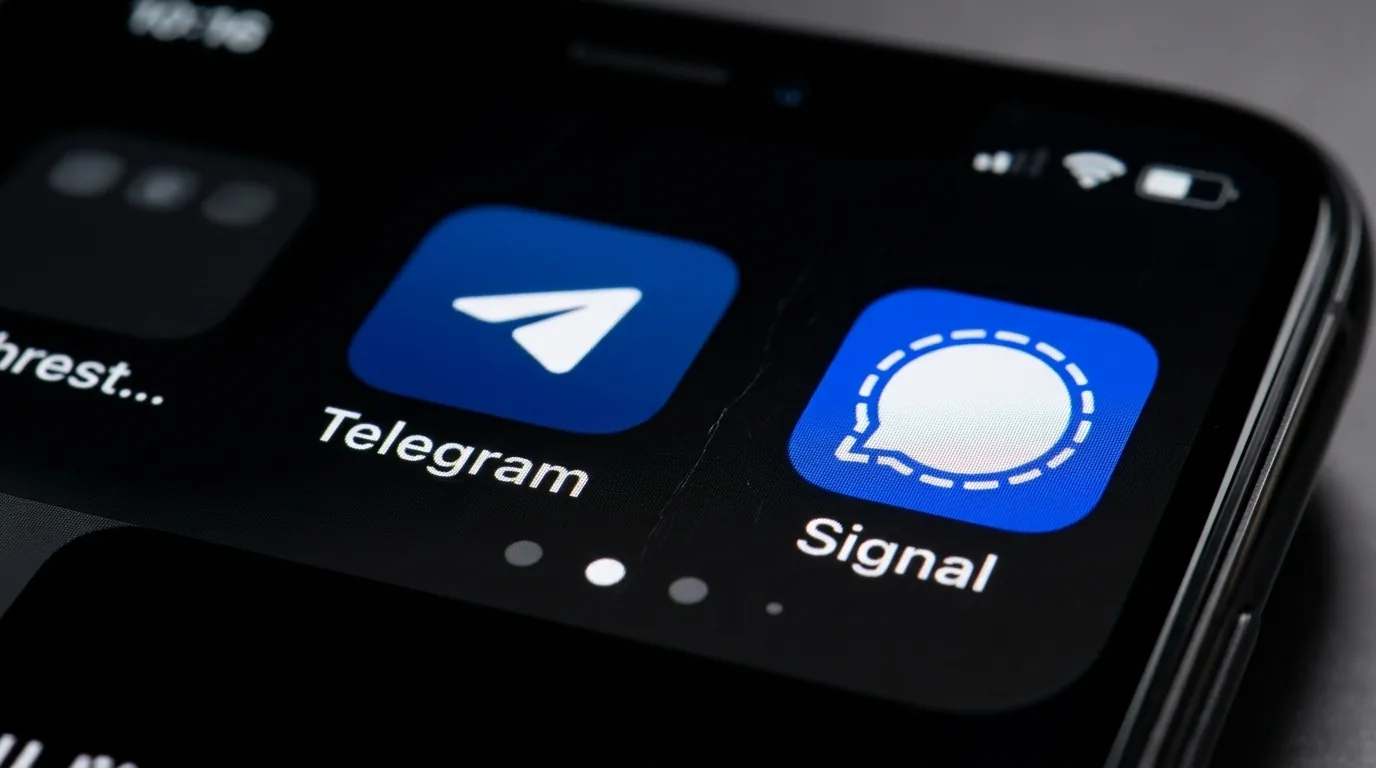
If you worry about who can read your messages, you've probably already asked yourself the big question: in the Telegram vs Signal showdown, which is safer and more private in 2026? It's one of the most searched comparisons and, at the same time, one that sparks the most misunderstandings, because each app starts from a different philosophy and measures success in a different way. Here you'll find a fair comparison, without exaggerations or marketing, so you can decide wisely.The short answer is that Signal is the strictest option for privacy by design, while Telegram offers a powerful balance between convenience, features and security. But the long answer is far more interesting, because "safe" and "private" don't mean the same thing, and the right choice depends on how you use the app in your daily life.In this guide you'll see the real nuance of encryption (the point where almost everyone gets confused), a clear comparison table, what each app brings to the table and, above all, who each one is best for. By the end you'll know exactly which one fits you without falling for the myth that one is perfect and the other a disaster.
What does "secure messaging" really mean?
Before comparing, it helps to separate two concepts that people tend to mix up. Security is about protecting the content of your messages from third parties. Privacy goes one step further: it refers to how much data about you (your contacts, your number, your habits) is exposed or stored. An app can encrypt very well and still keep metadata; another can minimize data to the extreme.The centerpiece of any secure messaging app is end-to-end encryption (or E2EE for short). When a chat uses end-to-end encryption, only your device and the other person's can decrypt the content: not even the server that carries the message can read it. This is the gold standard, but it's not the only way to protect data.
Encryption in Telegram vs Signal: here's the key difference
This is the heart of the debate and where the most misinformation circulates, so let's be precise. Signal uses end-to-end encryption by default in all of its chats: one-on-one messages, groups, calls and video calls. You don't have to enable anything; it comes that way out of the box.In Telegram the model is different and deserves a proper explanation. Telegram applies end-to-end encryption only in Secret Chats and in one-on-one voice and video calls. The rest of your conversations, the so-called cloud chats, use client-server encryption: the content travels encrypted between your phone and Telegram's servers, and it's stored encrypted there, but it's not end-to-end.
The client-server encryption of cloud chats isn't a flaw but a design decision: it's precisely what lets you open Telegram on your phone, tablet and computer and find your entire conversation synced instantly. With pure end-to-end encryption, that full synchronization wouldn't be possible in the same way.
In practical terms: if you want maximum protection in Telegram for a specific conversation, use a Secret Chat. If you value opening the app on any device and having everything at hand, cloud chats will give you that convenience in exchange for a different encryption model. You can dive deeper into this topic in our guide on Telegram's cloud and Secret Chats.
Comparison table: Telegram vs Signal at a glance
For a quick overview, here are the key points of Signal vs Telegram summarized. Remember that "better" depends on your priorities: there's no absolute winner.
Encryption | End-to-end in Secret Chats and 1-on-1 calls; client-server in cloud chats | End-to-end by default in all chats
Features | Huge groups, channels, bots, Mini Apps, polls and much more | Minimalist focus on messages, calls and groups
Cloud and cross-platform | Full cloud sync across all your devices | History tied mainly to the device, with linked desktop apps
Metadata | Requires a number to sign up; lets you use a public username to hide it | Requires a number; designed to minimize metadata
Open source | Open-source client apps | Open-source client and server
Community | Huge ecosystem of groups, channels and creators | Smaller community very focused on privacy
What Telegram brings: huge groups, channels, bots and cloud
This is where Telegram truly shines. If you're looking for a platform to build community, stay informed or automate tasks, it's hard to find anything as complete. These are its big strengths:
- Huge groups: it supports massive communities, ideal for events, support or shared hobbies.
- Channels: perfect for broadcasting messages to thousands of people, like a news feed or a media outlet.
- Bots: small programs that reply, moderate, send alerts or even handle payments inside the chat.
- Cloud and cross-platform: your chats follow you to any device without needing to have your phone turned on.
- Mini Apps: apps that run inside Telegram, from stores to games, without leaving the app.
That ecosystem is exactly what makes Telegram a place to discover new interests. If you like to explore, you can take a look at our catalog of groups and channels, check out trending groups or browse all the topic categories to find your ideal community. If you're into technical topics, there's a whole section of technology groups waiting for you.And if you want to compare Telegram with other popular apps, we have dedicated analyses of Telegram vs WhatsApp and Telegram vs Discord, which round out this comparison nicely.
What Signal brings: minimalism and privacy by default
If Telegram is a Swiss Army knife, Signal is a scalpel. Its philosophy is to do one thing (private messaging) and do it in the most airtight way possible. These are its strengths:
- Privacy by default: you don't have to configure anything to get end-to-end encryption on everything.
- Open source: both the client and the server are open source, so anyone can audit how it works.
- Minimalism: a clean, distraction-free interface focused on conversation.
- Minimal data: its design aims to collect the least possible information about you.
Signal doesn't aim to be a community platform or a bot ecosystem; its value lies precisely in what it chooses not to do. For anyone who wants their conversations to leave the smallest possible footprint, it's an excellent choice.
Telegram Signal privacy: metadata and open source
Beyond content encryption, privacy is also decided in the metadata: who you talk to, when and from where. Signal has made reducing metadata one of its banners, with mechanisms designed so that not even the service knows too much about your interactions.Telegram, for its part, lets you protect yourself in a different way: although you need a number to sign up, you can use a public username to talk to people without revealing your phone, and you have very granular privacy settings to control who sees your number, your photo, your last seen or who can add you to groups. Fine-tuning those options is, in fact, one of the best ways to protect yourself from the most common scams on the app.As for open source, Telegram's client apps are open and auditable, while in Signal both the client and the server are. For the everyday user, the practical takeaway is simple: both apps take security seriously, but Signal bets on total end-to-end transparency and Telegram on a balance between openness, convenience and features.
Which is safer, Telegram or Signal? Who each app is for
We reach the million-dollar question: which is safer, Telegram or Signal? If we're talking strictly about end-to-end encryption applied to everything by default, Signal has the edge. But "safer on paper" doesn't always mean "better for you", because the ideal app is the one you use well and that adapts to your life.
Signal is better for you if...
- Your number one priority is privacy and you want end-to-end encryption on absolutely everything.
- You prefer a simple app, without extra features you won't use.
- You care that the server code is auditable and that minimal data is collected.
- Your conversations are mostly personal, one-on-one or in small, trusted groups.
Telegram is better for you if...
- You want to create or join huge groups, channels or topic-based communities.
- You value opening your chats on your phone, tablet and computer with instant sync.
- You're interested in bots, Mini Apps and a rich content ecosystem.
- You want reinforced security when you need it (Secret Chats) without giving up convenience the rest of the time.
The good news is that you don't have to choose just one. Many people use Signal for their most sensitive conversations and Telegram to discover communities, stay informed and take part in groups. They're complementary tools rather than absolute rivals.
How to strengthen your security in either one
Whichever you choose, a few basic habits make the difference. Follow these steps:
- Enable two-step verification to protect your account with an additional password.
- Periodically review your active sessions and close the ones you don't recognize.
- In Telegram, use Secret Chats for the most sensitive matters and set up your privacy settings thoroughly, reviewing who can see your number and your last seen.
- Be wary of suspicious links and messages: most problems come from social engineering, not from encryption.
Frequently asked questions
Is Telegram insecure for not using end-to-end encryption on everything?
No. Telegram protects cloud chats with client-server encryption and offers end-to-end encryption in Secret Chats and in 1-on-1 calls. It's not "insecure"; it simply uses a different model that prioritizes cloud synchronization. For very sensitive conversations, using a Secret Chat gives you the maximum level.
Does Signal have fewer features than Telegram?
Signal is more minimalist on purpose, but it more than covers the essentials: messages, calls, video calls, groups and voice notes, all end-to-end encrypted. It doesn't aim to compete in giant groups or bots; its value lies in privacy and simplicity.
On Telegram Signal privacy, which one collects less data?
Signal is designed to minimize metadata and collect the least possible information, and its server is open source. Telegram lets you hide your number with a public username and fine-tune your privacy in detail. If your absolute priority is to leave the smallest footprint, Signal is the benchmark.
Can I use Telegram and Signal at the same time?
Of course, and that's what many people do. You can reserve Signal for your most private conversations and take advantage of Telegram for communities, channels and discovering content. They don't compete for the same space on your phone.
Which is safer, Telegram or Signal, for the average user?
If you measure "safe" as end-to-end encryption by default on everything, Signal wins. If you value a balance between security, convenience and features, Telegram is excellent, especially by using Secret Chats when it matters. The safest app is, in the end, the one you set up and use well.
Conclusion
In the Telegram vs Signal matchup there's no loser: there are two magnificent tools with different goals. Signal is the choice for anyone who puts privacy above all else, with end-to-end encryption by default and a minimalist design. Telegram is the Swiss Army knife of messaging, with huge groups, channels, bots, cloud and Mini Apps, and reinforced security when you need it. Choosing well is a matter of knowing what you prioritize.If it's all clear now and you want to make the most of Telegram, take the next step and explore our catalog of Telegram groups and channels to find communities that fit you, or encourage others to join and publish your own group to start growing today.
Related articles

Using Telegram just to chat? You're missing the best part. Discover the 12 categories of free Telegram bots that translate, remind, make stickers and organize your group, how to use them step by step and how to avoid the dangerous ones.

Learn how to use scheduled messages in Telegram and much more: schedule sends with a date and time, fire off silent messages with no notification, edit what you already sent, delete for everyone, and automate your channel with bots. A hands-on, step-by-step guide from your phone.

Learn how to set up Telegram voice chats: live audio rooms inside your groups plus 1-on-1 or team video calls, free and with no time limit. We show you how to open the room as an admin, invite, mute, raise your hand and share your screen, with the security nuance worth knowing.